


If your solid hardwood floors are looking a little tired, dull, or scratched from years of Colorado adventures, muddy hiking boots, and energetic pets, you aren’t alone. For many homeowners from Arvada to Parker, hardwood is the heart of the home.
But the thought of a full, traditional hardwood refinishing project complete with industrial sanders, clouds of fine wood dust in every heating duct, and moving out of the house for a week can feel completely overwhelming.
That leads to a question we hear all the time during our shop-at-home consultations: Can you actually refinish hardwood floors without sanding?
The short answer is yes, under the right conditions.
The longer answer involves understanding the difference between surface-level wear and deep structural damage, knowing the process known as "screen and recoat," and identifying when non-sanding methods make sense for your home.
Table of Contents
What Does Hardwood Refinishing Without Sanding Actually Mean?
3 Instances When You CAN Refinish Without Sanding
Instance #1: The Wear Is Only in the Topcoat
Instance #2: You Don’t Want to Change the Color
Instance #3: You Have Engineered Hardwood
When Wood Floor Sanding Is the Only Real Solution
Get a Free Consultation Today with Simply Floors in Denver, CO
What Does Hardwood Refinishing Without Sanding Actually Mean?
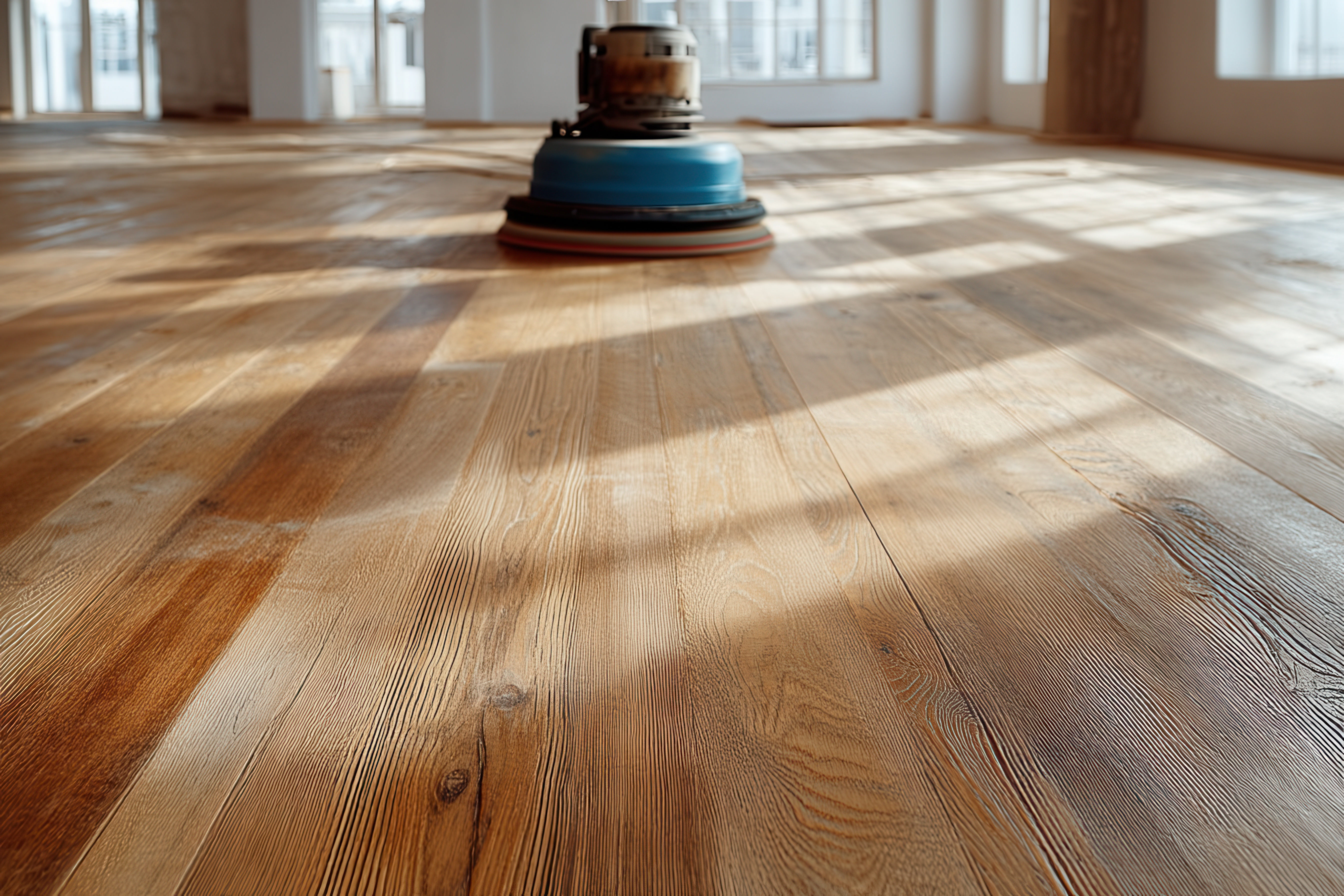
When flooring specialists talk about refreshing hardwood without traditional drum sanding, they are usually referring to a process called buffing and recoating (often called a screen and recoat or chemical abrasion).
Instead of stripping the floor down to bare wood with heavy-grit sandpaper, a technician uses a floor buffer equipped with a fine abrasive screen or a specialized conditioning solution.
Here is how the non-sanding recoat process works:
Deep Surface Cleaning: The floor is scrubbed with commercial-grade wood floor cleaners to remove built-up dirt, oils, and household residues.
Light Abrasion (Screening): A light mesh screen mechanically scuffs the existing polyurethane or protective topcoat. It does not cut down to the raw lumber; it simply creates microscopic grooves so a new protective layer can bond securely.
Application of Fresh Finish: A new coat of clear, durable topcoat (typically water-based or oil-modified polyurethane) is applied across the entire floor surface.
The result? A restored, even sheen that protects the wood beneath completed in a fraction of the time, without the mess of airborne sawdust.
3 Instances When You CAN Refinish Without Sanding
A screen and recoat is an outstanding, cost-effective maintenance step, but it only works if your floor’s underlying finish is still structurally intact.
A Good Candidate for Recoating | Requires Traditional Sanding |
Minor, surface-level clearcoat wear | Scratches extending into bare wood |
Dull, cloudy, or faded sheen | Graying or black water stains |
Light surface scuffs from pet claws | Sun-bleached or discoloration spots |
Factory-finished engineered wood | Cupped, crowned, or warped planks |
Floors never treated with wax/oils | Desired complete change of stain |
Instance #1: The Wear Is Only in the Topcoat
If your floor has lost its luster or has light surface scuffs from everyday foot traffic, but the wood color itself hasn't turned gray or exposed raw fiber, a recoat will restore clarity and protection.
Instance #2: You Don’t Want to Change the Color
Because non-sanding techniques do not strip the floor down to raw timber, you cannot change the underlying stain.
If you love your existing honey oak, natural maple, or warm chestnut hue and simply want it protected, recoating is ideal.
Instance #3: You Have Engineered Hardwood
Engineered hardwood features a real wood veneer atop a structural core. Depending on the thickness of that top wear layer (often between 1mm and 4mm), traditional drum sanding might sand straight through the veneer and ruin the floor.
A non-sanding screen and recoat is often the safest, most reliable way to revive engineered planks.
When Wood Floor Sanding Is the Only Real Solution
While non-sanding methods sound convenient, they aren't magic. In several common scenarios, skipping the sander won't deliver the results you want:
Deep Scratches and Gouges: If claws, heavy furniture, or dropped items cut completely through the finish into the actual wood, a fresh coat of polyurethane will simply sit inside the groove. It won't level out or erase the mark.
Moisture Damage & Stains: Pet urine, water spills near the sink, or moisture from potted plants create dark gray or black stains deep in the wood fiber. These stains cannot be covered up with a clear topcoat; the wood must be sanded down past the discoloration (or the damaged boards replaced).
Warping, Cupping, or Uneven Edges: If boards have expanded or cupped due to Colorado's dry winter air alternating with humid summer storms, physical drum sanding is required to flatten the floor plane.
Floors Coated with Wax or Chemical Cleaners: If you have routinely used furniture polish, paste wax, or oil-based rejuvenating cleansers (like Murphy’s Oil Soap or quick-shine acrylic polishes), these residues soak into the finish. New polyurethane cannot bond to wax and will blister or peel within weeks. In these cases, complete sanding is usually required to remove the contaminated layer.
The "Water Drop Test"
Not sure if your hardwood finish is still intact? Try this quick test in a high-traffic area (like near the kitchen island or front entryway):
The Test: Place a few drops of tap water onto the floorboards.
If the water beads up: Your finish is doing its job. A light screen and recoat can refresh the shine and reinforce that protective barrier.
If the water slowly soaks in or darkens the wood: The finish has worn down to bare timber. Applying liquid topcoats over exposed wood will result in uneven, patchy blotches. In this case, a traditional sanding and refinishing—or full plank replacement—is the correct path forward.
Get a Free Consultation Today with Simply Floors in Denver, CO
Navigating whether your floors can be preserved or need a full reset shouldn't involve guessing or pressure from commission-driven sales reps.
At Simply Floors, our woman-owned, family-operated team believes in providing straightforward product education right where it matters most: your home. Whether you live in a classic brick ranch in Wheat Ridge, a two-story in Centennial, or a mid-century home in Golden, Buddy and Karyn Mitchell built Simply Floors on a promise to enthusiastically exceed expectations and deliver excellence in every detail.
We skip the mega-showroom overhead so we can focus on giving you honest guidance, transparent pricing, and quality flooring choices that fit your family’s real-world routine. If your hardwood can be refreshed, we’ll tell you. And if the wear has gone past the point of recoating, we’ll help you compare the cost of full refinishing against beautiful, durable new options, like modern solid hardwoods, engineered wood, or waterproof luxury vinyl planks viewed directly under your home's natural light.
Our Service Areas Include: Wheat Ridge, Centennial, Denver, Arvada, Aurora, Golden, and Parker, CO
Arvada, CO
Address: 5945 Ward Rd Arvada, CO 80004
Phone: (303) 731-5380
Centennial, CO
Address: 8101 S Quebec St. #2 Centennial, CO 80112
Phone: (303) 731-5380
Aurora, CO
Address: 17034 E Quincy Ave. Aurora, CO 80015
Phone: (303) 731-5380
About Simply Floors Inc.
At Simply Floors, we believe the best place to choose your new flooring isn’t under the buzzing fluorescent lights of a warehouse, but in the natural light of your own home where your life actually happens. As a woman-owned, family-operated business serving the Colorado Front Range—from Arvada and Wheat Ridge to Centennial and Parker—we’ve traded the high overhead of "mega-showrooms" for a personalized shop-at-home experience that puts you in control.
Our mission is built on a simple promise to enthusiastically exceed your expectations by providing curated, high-quality selections and transparent pricing without the big-box stress. Whether you are replacing well-worn carpet or updating your forever home, our dedicated team handles every detail with "Excellence in the Ordinary," ensuring a seamless, professional journey from the first measurement to the final plank.


